


Growing up in a distant corner of England, my high school days were a sort of love-hate story: loved Geography and hated the rest; loved one or two teachers, hated the others. Not an obvious route to success, so with disaster looming I grabbed the lifeline that was thrown my way and jumped on a boat bound for a land where I could rethink opportunities: Australia.
A three-week voyage halfway around the globe brought my geographic fantasies to life. At the tender age of sixteen I found myself footing the back streets of Naples, devouring a moonlit meal in an Aden souk and gaining a first taste of a sweaty Asia, in Colombo.
For several years I remained captivated by the vast, sprawling land down under which had become my new home. Then came a holiday in New Caledonia, bringing back the memories of a tropical Asia, first conjured up in Colombo five or six years before. There was a further gap of consolidating life in outback corners of Australia, before taking up the character-building Aussie ritual of returning to Mother England and back-packing Europe. The route to get there was via Hong Kong and Bangkok.
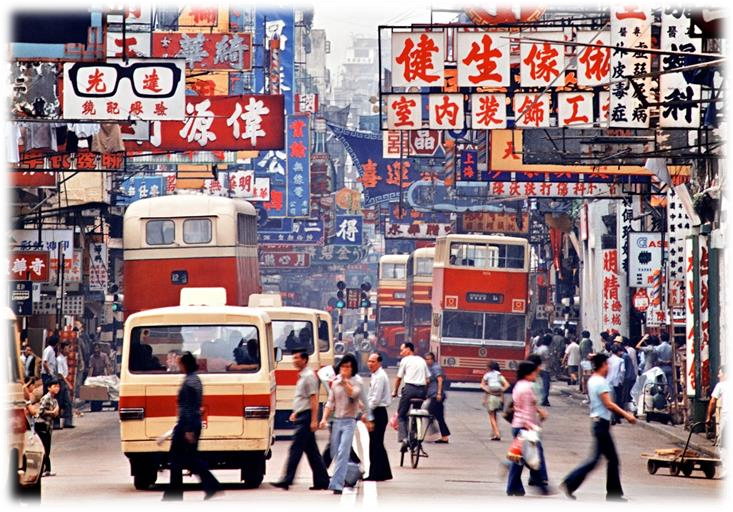
Hong Kong in the latter years of the 20th Century was even then a mass of towering concrete and glass, while Bangkok was already developing a dubious reputation as the traffic-jam mecca of Asia. Landing into Hong Kong – on the old airstrip that jutted out into Victoria Harbour, like Brighton Pier into the English Channel, was exhilarating. I was told it was a challenge for pilots to stay above the roof tops, whilst hitting the strip early enough, to avoid ending up in the drink at the other end! The whole city was a mind blowing experience for me: a young man just arrived from a very white Australia,
suddenly immersed into an incredibly diverse Asian setting. Yet there were a host of similarities which made transition to such a land of opposites, that little bit easier: the Star Ferry reminded me of Sydney; The taxis of Melbourne, the buses of London; and all – at that time in history – still in the safe hands of good Queen Elizabeth.
This brief Asian stopover lasted only a week, but by the end I was reluctant to leave for the earlier perceived safety of my birthplace and a hitch-hiker’s Europe. Short in time, but long enough to confirm the workings of my geographical brain, which demonstrated an attraction to unfamiliar parts of the globe and the peoples who inhabited those places. My Hong Kong and Bangkok stop-overs reaffirmed a need to travel, alluding to a world beyond the boundaries of white, English-speaking parts: a world that could hold a multitude of new and robust experiences; enough to test my senses.
Those fleeting moments of time in hot and humid lands, left more of an impression on my mind than I could have known. In the early 1980s I ditched a promising career in industry and went back to the classroom, to learn more about development issues, in
Travels | Developing a love for Asia | 3 Asia and the so-called Third World. My early flair for geography and a longing to know
more about the wider world, was coming to the fore.
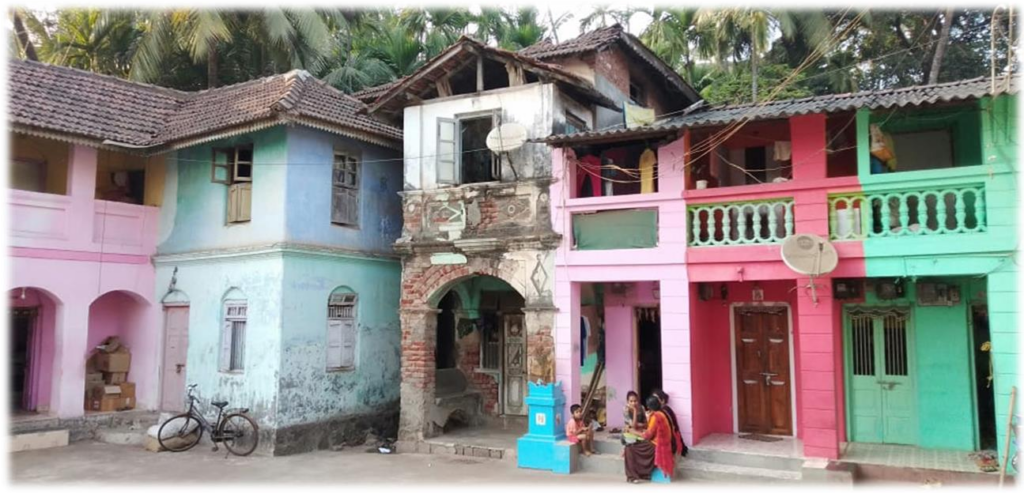
As part of the process – and to give the course a more tangible feel – I managed to include a mini-thesis, based on development project work carried out by Oxfam, India. This gave me both reason and vehicle to re-visit Asia – probably the underlying intention from the start – but with a profoundly altered approach, compared to earlier travels. Now, I was to be plunged into the South Asia interior, whereas before I had simply skated on the veneer of Asian mega-cities. I was to discover a vast disparity between these two, almost opposing perspectives.
A few years after that, in the late 1980s, I returned to Asia as part of my Australian based job, where once again – and not dissimilar to the mini-thesis which was added to my studies a few years before – I managed to build in a component which involved
outreach to South Asia. This work was directed towards schools and focused on enabling young people to understand perspectives from different peoples and faraway places. In some respects, I was putting into practice my love for all things geographical and a type of learning that introduced the learner to people and places which in a
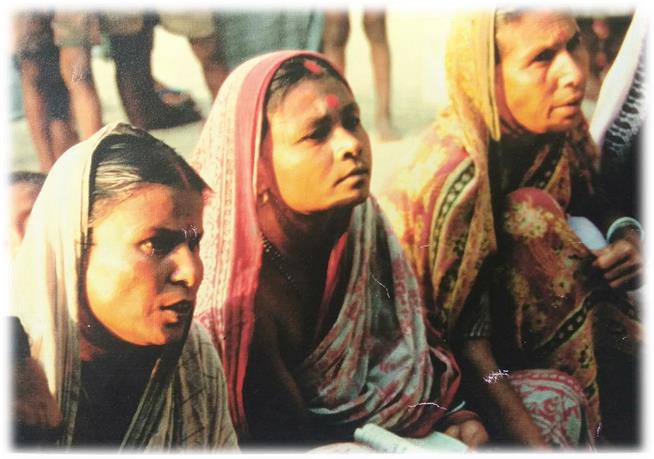
practical sense, were beyond his or her capacity to reach. I was in fact building a learning process for others based on my own experiences. At around this time, I also visited Bangladesh to photograph and report on a series of development projects; perhaps one of the most memorable episodes in my life.
There was a brief interim stage in the 1990s when I switched to teaching English as a Foreign Language (TEFL). This took me to Singapore, Bangkok and many other places in between: back once again to Asia. But then a few years after this flirtation with TEFL – and from a new British headquarters – I returned to working in partnership with my Travels | Developing a love for Asia | 4 previous Mumbai-based colleagues in India. By then, these key Indian educators and their families had become very close friends. The work repeated the type of networks I had built up between schools in Australia and India, but this time with a focus on links between the UK and India. This transition perhaps showed that though I loved the TEFL work with non-English speakers, my real passion was in the development field, and particularly that part which involved hands-on, South-North connections.
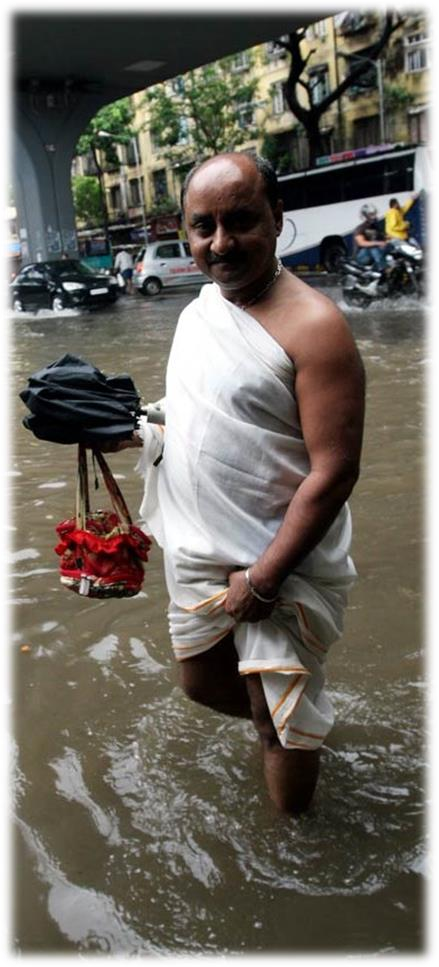
Alongside many years of Asian travel, I began to write poetry, one of the earlier works being three verses, penned whilst looking out from the shelter of an open-air café onto a kind of monsoon mayhem. Poetry for me, needs an incident of note to set the brain cells revolving, which then ends up after some time in the form of a poem that recounts and analyses the event. Mumbai Mad is a good example:
Mumbai Mad!
I moved to take some refuge,
To escape this teaming deluge
That just appears to tumble
From a darkly ashen sky.
Then sit and watch them scurry
In a lazy sort of hurry,
Soaked, no saturated
By that waterfall on high.
Battered buses honking.
Auto rickshaws squawking;
They wiggle and they waggle
As they tussle for the road.
The noise, the air pollution!
Who care? There’s no solution.
And bigger makes it better
Is the only Highway Code.
No cease to endless motion.
Is peace just a Gandhian Notion
That Mumbaikars adhere to
When they go to sleep at night?
Or is this mad cacophony
The prologue for a symphony
That starts, as people say,
When you’ve trod the path that’s right.